


/01 Equipment and features
/02 Specifications
Technical specifications
/03 Optional features
Inert Gas Infusion system
Argon or Nitrogen can be used with exhaust connection for external venting system
Advanced De-powdering System
-
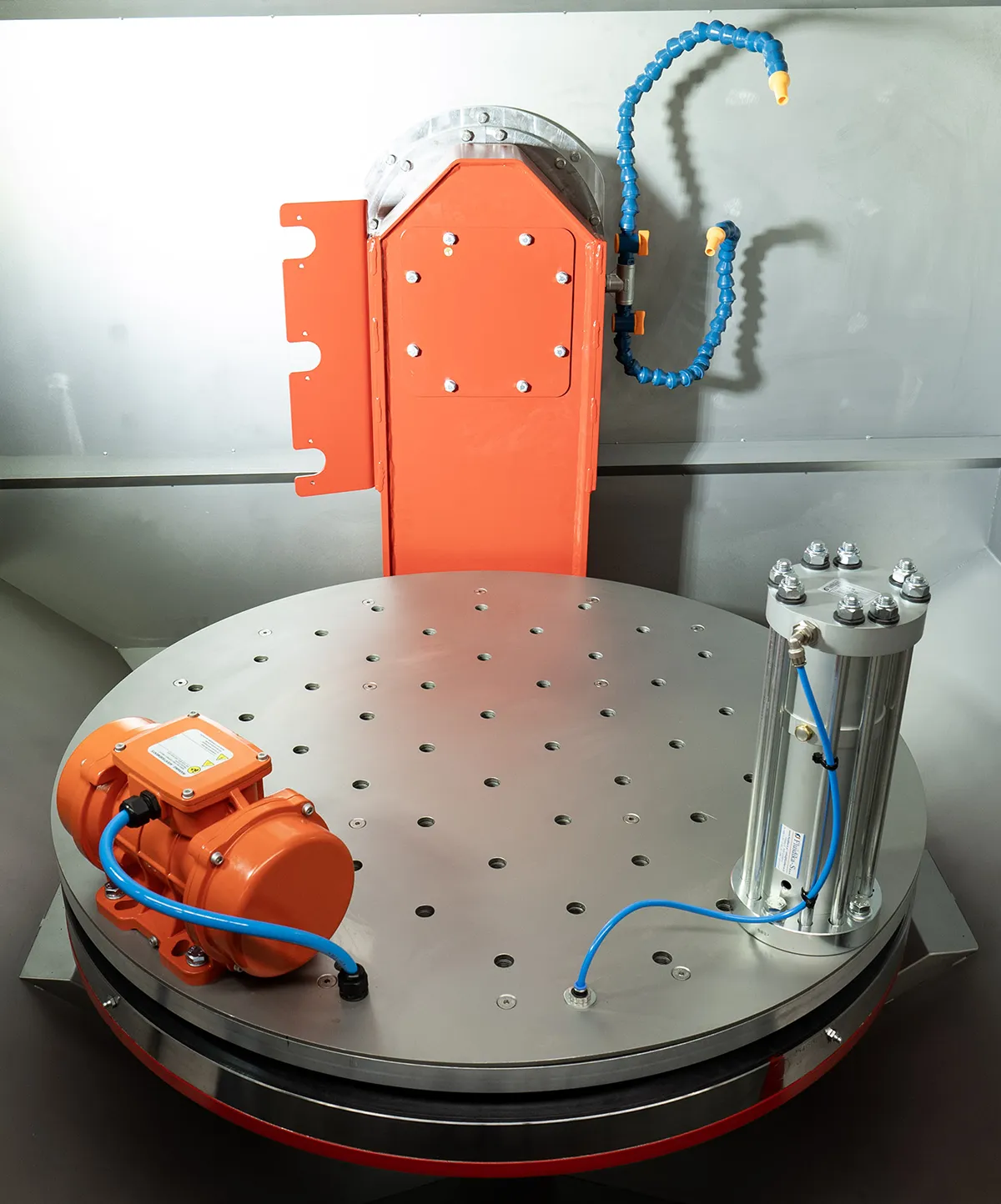
Rotary table customization to fit your specific build plates
-
Pneumatic knocker and additional electro vibrator
-
Programmable blow off nozzles on swivel arm
Smart Measurement Analytics
-
Inert gas & compressed air consumption
-
Electricity consumption
-
Humidity inside the working chamber
-
Temperature inside the working chamer

/04 Optimize Depowdering with Orbi Software
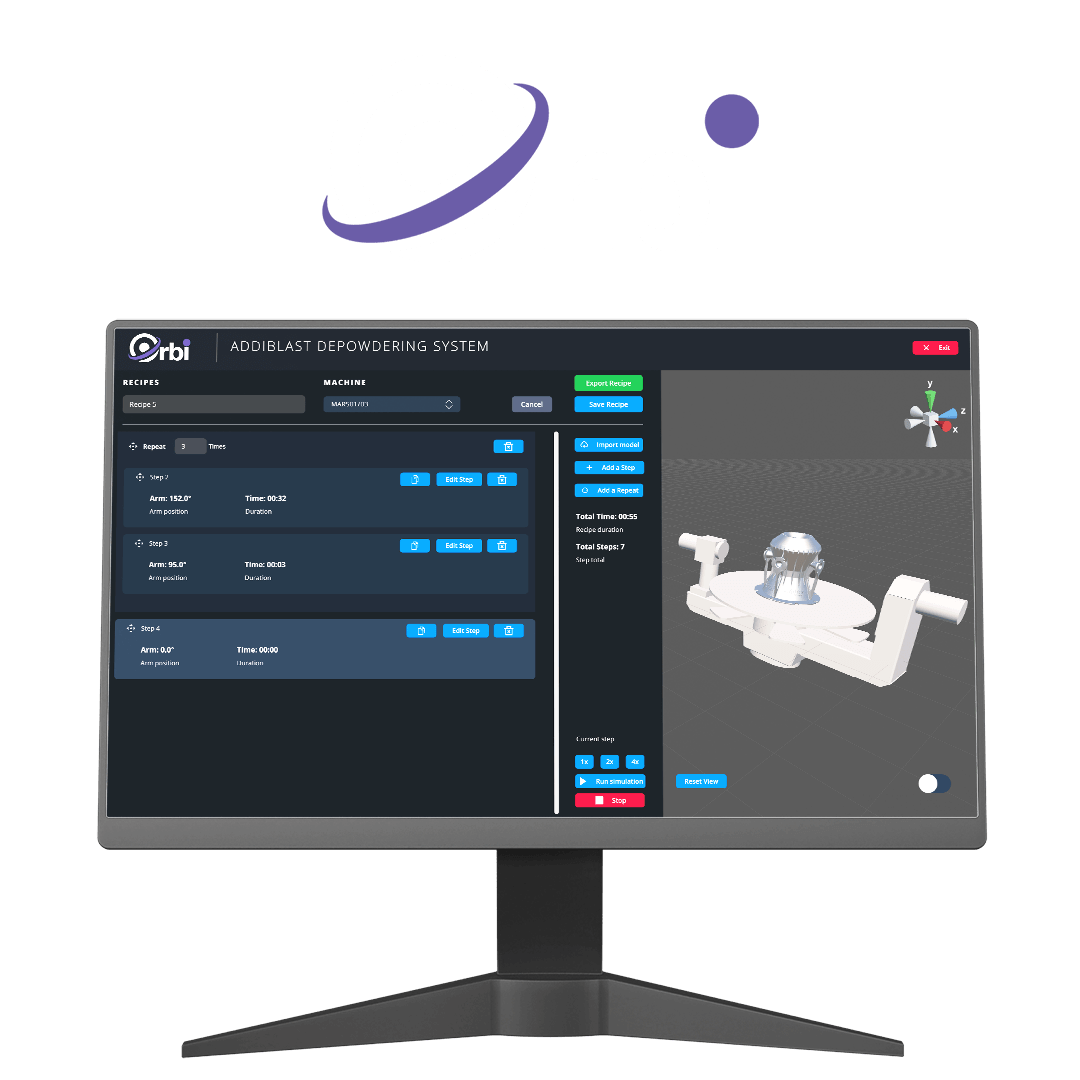
For even greater precision and control, the MARS04 automated depowdering system can be enhanced with Orbi Depowdering Software — the smart way to plan, simulate, and execute depowdering recipes.
-
Save time and reduce trial and error
-
Increase process consistency and repeatability
-
Store, reuse, and standardize recipes across production runs
-
Seamlessly integrated with MARS depowdering systems, including MARS04
Orbi gives production engineers and additive manufacturing specialists more control than ever over their additive manufacturing post-processing workflows, helping reduce waste, increase part quality, and boost overall efficiency.
Orbi allows you to digitally create and refine depowdering parameters before running the process. By simulating part rotation, movement paths, and powder extraction settings, Orbi ensures that each cleaning cycle is optimized for part geometry, material, and complexity.
/05 Automated Depowdering for Complex and Large-Scale Metal 3D Printed Parts
The MARS04 automated depowdering station is designed to meet the toughest challenges in metal additive manufacturing post-processing. Developed for precision, efficiency, and safety, it offers a fully automated solution for removing powder from large and intricate 3D printed parts — streamlining your workflow from printer to end-use component.
Built to handle oversized builds, heavy parts, and complex geometries, MARS04 brings together advanced automation, customizable features, and seamless integration with ORBI depowdering software to offer unmatched control and repeatability.
Why Choose MARS04?
With capacity for build plates up to 600×600 mm and part heights up to 1000 mm, MARS04 is engineered for the next generation of large-format metal AM parts. It can manage loads up to 900 kg, making it ideal for industries such as aerospace, space, automotive, and energy.
Equipped with a servo-controlled rotary table and a swivel arm offering 360° continuous rotation. Programmable blow-off nozzles can target hard-to-reach areas precisely, removing stubborn powder safely and efficiently.
Designed for seamless integration with Addiblast’s STAR01 powder recycling system, the MARS04 enables direct recycling and reuse of metal powders, improving sustainability and reducing costs.
Featuring a modern Windows-based Panel PC, MARS04 makes recipe storage, recall, and adjustment quick and simple. Recipes can be easily set and reused to ensure repeatability and streamline production workflows.
/06 Video presentation
/07 Frequently Asked Questions
- What sizes of parts can MARS04 process?
MARS04 supports build plates up to 600×600 mm and part heights up to 1000 mm, with a maximum load capacity of 900 kg. - Can MARS04 safely process reactive metal powders?
Yes. With inert gas infusion, MARS04 creates a low-oxygen environment to prevent oxidation and explosion risks when processing powders like titanium and aluminum. - Does MARS04 work with Orbi software?
Absolutely. Orbi allows operators to create, simulate, and optimize depowdering recipes before execution, ensuring efficient powder removal and process repeatability. - Is the depowdering process fully automated?
Yes. MARS04 offers servo-driven rotary and swivel arm movement, programmable nozzles, and smart analytics for largely hands-free operation. - Can MARS04 be integrated with powder recycling?
Yes. The system connects directly to Addiblast’s STAR01 powder recycling unit, providing closed-loop powder handling and recovery for improved sustainability and reduced costs.
